
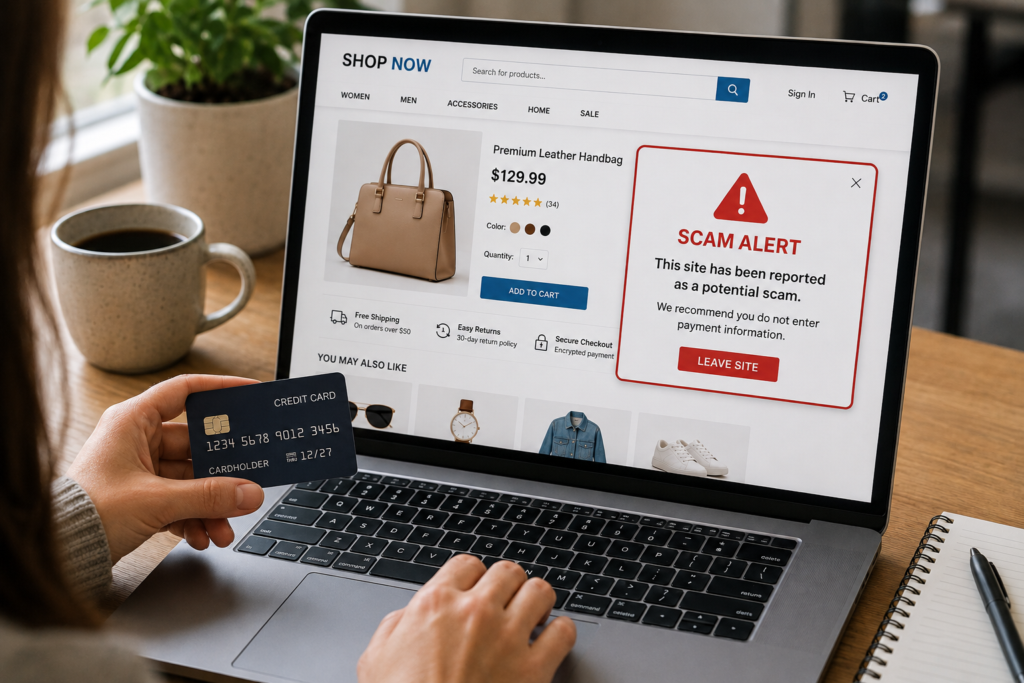
Online shopping is the new normal. In fact, a recent study revealed that while 70% of retail sales still occurred in-store, online sales were projected to increase from now through 2030. In other words, buying online isn’t going away – and it will probably become even more convenient.
Using the internet comes with its security risks, particularly when it concerns your money. Scammers and predatory retailers are out in full force, taking advantage of the shift to online purchases. They can lure even the savviest shopper. Let’s look at these scenarios so the next time you shop, you can protect yourself and your wallet.
Online Shopping Scams
Actual scammers engage in illegal online activity and do not represent real businesses. Scammers employ a variety of creative tactics to appear legit:
- Fake websites and ads. Here, fraudsters create fake websites or ads mimicking legitimate retailers, offering popular branded items at ridiculously low prices. Once payment is made, the promised items never show up, or a cheap counterfeit item arrives at the customer’s door.
- Social media deception. Scammers set up fake profiles or pages on social media platforms, promoting deals that seem too good to be true.
- Phishing emails. Victims get emails appearing to be from reputable retailers, prompting them to click on malicious links or provide personal info, leading to unauthorized transactions or identity theft.
Stay Alert and Protect Yourself
Watch out for these warning signs, which can alert you to an online shopping scam:
- Deals that are too good to be true
- Requests for unusual payment methods like wire transfers, gift cards or cryptocurrency
- Lack of business contact information
- Poor website design and spelling errors
Take these preventative measures to protect yourself:
- Research sellers. Before making a purchase, look at the seller’s reviews and ratings.
- Verify website security. Ensure the website uses “https”, indicated by a padlock icon in the address bar, which signifies a secure connection.
- Pay with a credit card. Credit cards generally offer better fraud protection than debit cards and allow you to easily dispute unauthorized charges.
- Avoid public Wi-Fi for transactions. Only use a secure, private connection when making purchases online.
Predatory retail practices
While not necessarily illegal, many retailers use predatory retail tactics to either make their product seem better than it actually is, or entice you to buy something you wouldn’t have otherwise. Here’s some of the more common predatory practices used online:
- Free shipping thresholds and BOGO. Free shipping thresholds encourage you to spend more to qualify for free shipping.
- Fake inflation. Retailers sometimes set artificially high list prices to make the discount more appealing. A shirt listed for $89.99 discounted to $29.99 might never have actually sold for $89.99.
- Urgency. Phrases like “Only 2 left!” and “Offer ends in 2 hours!” are designed to create panic and push you towards impulse buys.
Preventative measures
Try these hacks to spot predatory retailers before you buy:
- Use price-tracking websites or browser extensions. Honey or PriceGrabber are great options that let you review an item’s actual price history.
- Leave the item in your cart for a few hours or even a full day. It may not be as urgent as the retailer made it sound.
- Calculate whether it’s cheaper to pay for shipping than to buy something you don’t need.
Steps to take if scammed
Whether it’s a scammer or a predatory business tactic, wasting or losing money on a purchase never feels good. Although they both can make us feel bad about ourselves, if you’ve really been victimized by an online shopping scam, there’s a few extra steps you need to take to regain your peace of mind. First, contact your credit union, bank or credit card company immediately to initiate a chargeback or freeze your account. Next, file a complaint with the Federal Trade Commission (FTC) at reportfraud.ftc.gov and your local consumer protection agency. Keep an eye on your checking and credit card statements for any unauthorized transactions. If you created an account on the fraudulent site, be sure to change your passwords for any other accounts that use the same or similar credentials. These steps are essential to minimize the damage to your accounts and prevent potential identity theft.
Stay safe!