
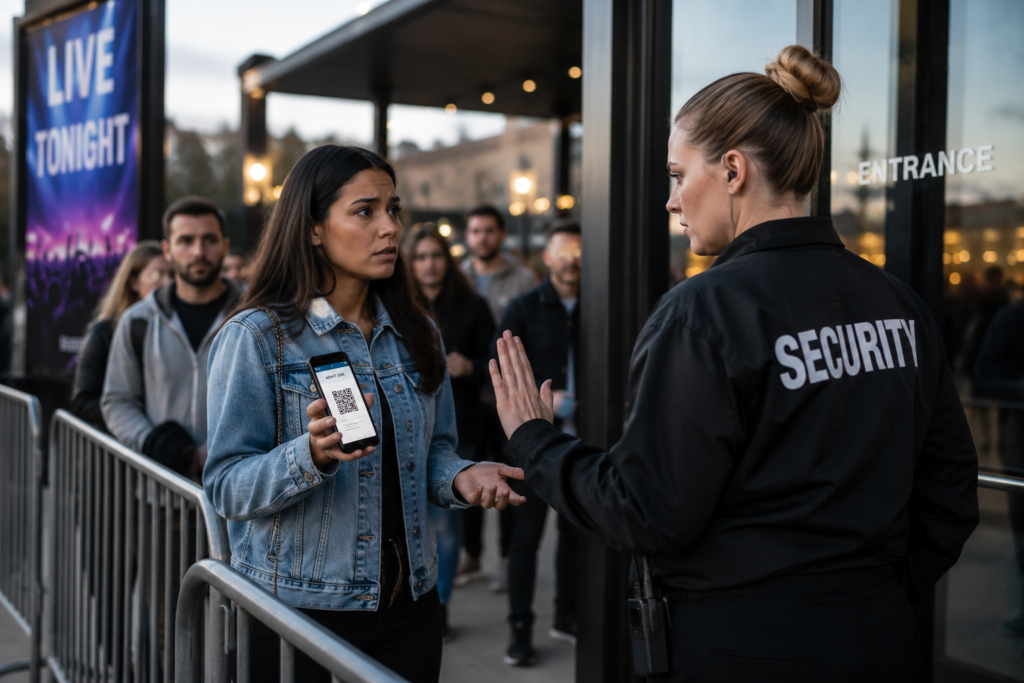
After months of dreaming, wishing, and praying, you’ve finally gotten into the concert experience of a lifetime. Beaming, you step forward and hand your ticket to the security guard at the entrance. You begin to stride forward, but he stops you dead in your tracks. He can’t let you into the concert because your ticket won’t scan. You’ve been sold a fake.
In a world of endless online accessibility, live performances are a valuable experience. Unfortunately, scam artists across the globe have realized this and are turning that value against people. Sellers on Craigslist and eBay have been hawking fraudulent tickets for years. Concert or sporting event tickets can cost hundreds of dollars at face value, and much more than that as the event approaches. Scam artists have tapped into that market big-time. All they need to do is ask you to pay online or mail your payment to a private P.O. box, and they’re almost untraceable.
Given the spread of online ticket exchanges, it may seem that there’s no alternative to buying tickets online. The era of the box office windows may be drawing to a close, but that doesn’t mean the safety it provided has gone away. So, what can you do to protect yourself?
1. Do your research
For starters, find out as much background information as you can. See if you can find out exactly what a real ticket looks like, so you can spot differences in a forged one. For sporting events, most national sanctioning organizations include holograms and other hard-to-fake pictures on their tickets. When in doubt, contact the venue.
2. Spot the spec
“Spec” tickets are sold speculatively, meaning the seller doesn’t have the physical tickets in their possession. They are merely tickets the seller expects to have after they come up for sale. If you see tickets for events that aren’t available at the box office yet, this is likely how they’re being sold. It’s better to wait until you can buy physical tickets. A “spec” seller is just as likely to take your money and run as they are to give you a ticket.
3. Make sellers do their homework
There are ways you can strike preemptively against fake ticket scammers:
- Ask for a copy of the seller’s invoice, proving that the tickets have been paid for in full. This is no different than asking for a receipt to prove the goods you’re buying aren’t stolen.
- For season ticket holders selling one event, ask for the ticket account number, which will always be printed at the top of the ticket.
- Ask the seller why they’re selling. Be skeptical of reasons why the seller is missing the event – no one schedules a funeral a month in advance, for example.
4. Deal with reputable websites
Craigslist should be a last resort. Check reputable websites like Ticketmaster, SeatGeek, or StubHub before you dive into Craigslist. Better yet, ask your friends if they know anyone with tickets. It’s always easier to deal with friends or co-workers than with anonymous strangers.
5. Trust your instincts
Always be wary of people who are selling tickets at face value or less. Unless prohibited by state law, many people who resell tickets will do so at a markup. Even someone with a last-second conflict will likely attempt to get face value for tickets to a popular event. Think like a scalper. If you saw a ticket for sale below face value, wouldn’t you snap it up, knowing you could multiply your money at the event? If a deal feels too good to be true, you know what to do.
6. Manage the meet
- See if you can meet your contact in person.
- Aim to meet in a well-lit, public place, such as a grocery store or other large retailer.
- Use mobile payments (like Venmo, Paypal, or CashApp) to create a digital paper trail. Alternatively, pay with a cashier’s check, as it contains little personally identifiable information and doesn’t require the same level of trust as a personal check.
- Always inspect the ticket carefully for signs of fraud before handing over any money. If the seller doesn’t agree, walk away.
Even high-quality video can’t compare to the thrill of a live performance. That being said, even a live performance isn’t worth giving up your account information and funds, not to mention the possibility of arrest at the gates! Follow these tips, and enjoy your concert worry-free.
Bonus Tip
Once you have your tickets in hand, you may want to share your exciting news on social media. You’re excited, and you should be! Be sure to keep your personal information safe when you post. Don’t post pictures of your ticket(s) containing all the relevant information unique to your purchase (such as seats and ticket serial numbers). Sophisticated scammers can replicate your ticket using that data. Better yet, don’t post about it until after the event is over.