
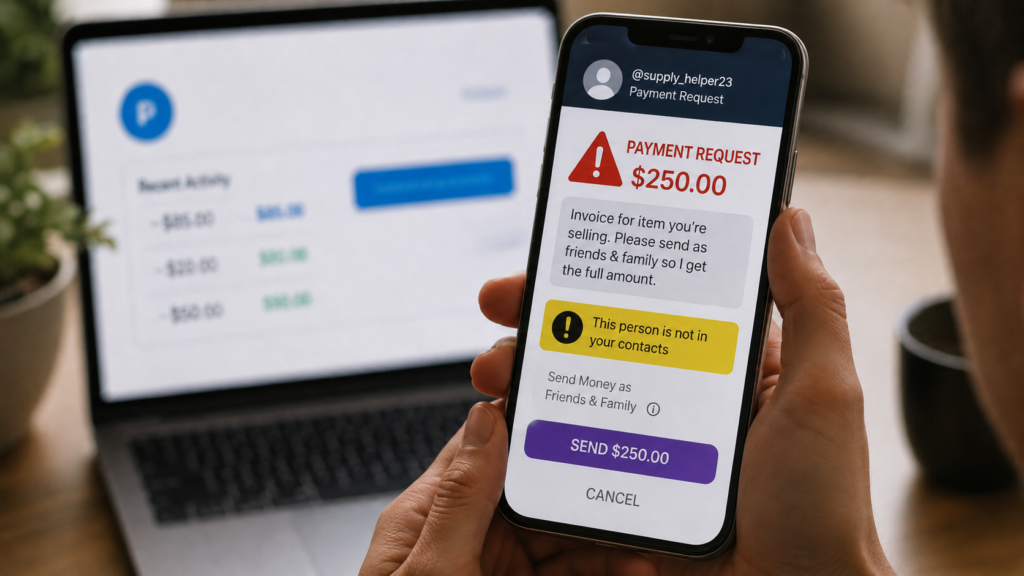
P2P platforms are convenient, but P2P scams are rampant and varied. Plus, once money is transferred by this method, it’s usually unrecoverable.
Here are five P2P scams to beware of:
1. Mystery money
In this P2P scam, a stranger “accidentally” sends money and reaches out, wanting their money back. The victim sees the added funds in their P2P account and returns them. Unfortunately, because the money was added to the target’s account using a stolen credit card or account, the platform flags the original transaction as fraud and removes funds from the victim’s account.
2. Hidden credit card fraud
A fraudster purchases an item listed on a site like Craigslist, using a P2P payment method. They pick up the item or have it shipped to their home, and they’re never heard from again. Meanwhile, the P2P platform eventually recognizes the payment came from a bogus source, and takes the money back from the seller.
3. Utility scams
In this scam, a “rep” from a utility company reaches out to a target, claiming their service will be shut off unless a payment is made immediately. The scammer insists on payment by P2P. Unfortunately, once the transfer is made, it can be impossible to reclaim the money.
4. Password scam
In this scam, an alleged representative of a credit union or bank reaches out to a target by text, asking them to approve a recent large P2P transfer from their account. A “no” response will prompt the scammer to call the victim, again posing as a rep from their financial institution. They offer to assist in reclaiming the allegedly defrauded money. To do so, the scammer claims the victim will need to share their Zelle login credentials. Unfortunately, if the victim shares the one-time passcode, the scammer can change the password and send themselves money through the victim’s account.
5. Bogus receipts
Here, a scammer inserts themselves into a legitimate P2P transaction by digitally manipulating a screenshot. They make it seem like they’ve completed part of an ongoing deal and insist you now owe them money. In truth, the transaction was never completed, and if you send the money, you’ll be sending it directly to a scammer’s P2P account.
Stay safe
- Only send and accept funds from people you know and trust.
- Always confirm you’re interacting with the correct person by verifying their phone number at every stage of the P2P transaction process.
- Call the P2P platform’s customer service number directly to resolve any errors. Similarly, reach out to your financial institution directly if you receive notification of an allegedly defrauded account.
- Check your checking account after every P2P transaction to confirm that you’ve received the funds.
Stay safe!